
Juan Longoria Wants AI to Give Leaders Their Time Back
Juan Longoria’s path from technical support to customer care leadership informs his view that AI should return time to the people who coach frontline teams.

AI leadership can give frontline managers more room to coach, rather than simply adding another dashboard to their workload. Juan Longoria’s career in customer care and BPO operations has led him to build around that idea: technology should help leaders focus on the human work that data alone cannot do.
In August 2026, Longoria said he had something he had not had in a long time: “space to build.” He used it to create CCPlaycaller, a coaching tool for contact center leaders. His concern is straightforward: teams may receive more information without giving their leaders more time to act on it.
Source: Juan Longoria Wants AI to Give Leaders Their Time Back
From the fields to the support floor
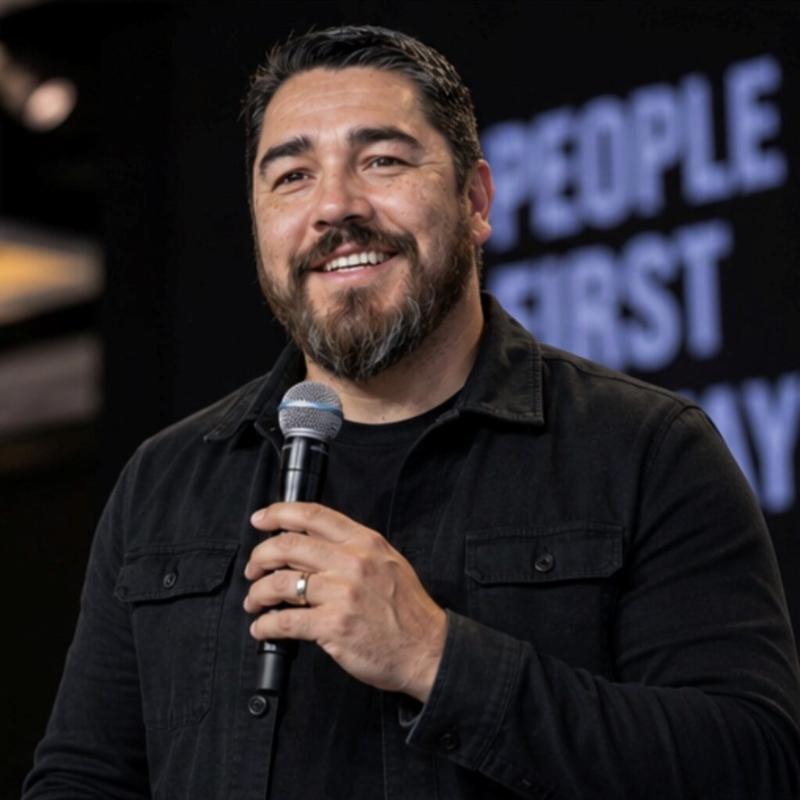
Longoria describes himself as “a kid from San Benito.” In an October 2026 conversation for Counsel Collective’s Adelante series, he recalled spending summers working the fields in Michigan with his family, bartending without a clear plan, and taking what he thought would be a short-term call center job to help pay tuition.
“More data is not the same as more time to lead.”
That first support role was technical support at Expert Global Solutions, now part of Alorica, from 2000 to 2003, according to his LinkedIn profile. He helped customers troubleshoot dial-up and broadband connections and trained new employees. Later, he held supervisor, analyst, partner program and operations roles at DISH Network, followed by a year at Pocket Communications.
In late 2008, he joined T-Mobile, where he spent nearly 14 years in care operations. His path—from troubleshooting a connection to leading complex support work—grounds his interest in frontline leadership in the everyday realities of serving customers and helping teams do the same.
Longoria was part of T-Mobile during its Team of Experts redesign, an experience Matthew Dixon later discussed in Harvard Business Review. Longoria has described the lesson he took from that work this way: “Innovation isn’t defined by the technology you buy. It’s defined by the problems you’re willing to solve and the investments you’re willing to make in your people.”
That emphasis on employees is also part of other conversations about AI in outsourcing. POEA Job Finder has explored why Andy Schachtel says keeping employees in the loop matters as BPO work changes. For Filipino job seekers, the practical question is how an employer’s tools affect the people expected to use them.
Learning BPO from the inside
In 2018, T-Mobile sent Longoria to Manila as Senior Manager, Global Care Operations. He told Counsel Collective that moving his family across the world for a role he had never done before was one of the less visible parts of the job. He was entering a new environment and taking responsibility for an underperforming partner site.
His LinkedIn profile credits him with helping raise the Manila site’s Net Promoter Score from 55 to 70 in 12 months. The operation moved from 25th in T-Mobile’s global network to first among its BPO partners. The profile attributes the turnaround to coaching, a restructured operation and closer alignment between onshore and offshore leaders.
That account places the Manila team within the story as an operation whose performance could change through leadership practices, not just tools or targets. It also illustrates why coaching and operational results are connected: leaders need to understand what is happening, identify where support is needed and follow through with the team.
From 2021, Longoria directed global messaging and chat care for the T-Mobile and Sprint brands. His profile says the role covered more than 7,000 BPO full-time staff across international sites, and that he led vendor selection for digital care. His responsibilities brought together large-scale operations, partner relationships and digital channels—the systems that shape customer support and the people who deliver it.
POEA Job Finder has also looked at a staff survey on AI use in outsourcing, including questions about impact and governance. For someone considering BPO work, that context can help turn general interest in AI into specific questions about workplace practices and support.
From telecom to rentals to hospitality
In 2022, Longoria joined Zillow, where he led client services and business operations for Zillow Rentals until August 2026. In September, he became Vice President of Customer Care at Enseo, which describes itself as a technology partner for modern hospitality.
His career has involved transitions between industries and roles, including the move to Manila for work he had not done before. In Counsel Collective’s October 2026 conversation, he offered a concise reflection on taking action amid uncertainty: “Confidence rarely shows up first. Courage does.”
Those moves also provide context for his interest in tools that work with the reality of a job rather than dictate it. In a separate discussion of enterprise AI, POEA Job Finder examined an approach that starts with existing systems and workflows, then connects people and technology through workflow optimization over time. Longoria’s story similarly keeps attention on the conditions teams need in order to do good work.
“AI isn't the strategy. It's the accelerator.”Juan Longoria · LinkedIn, August 2026
AI leadership and what success means
Longoria is wary of treating the amount of work handled without a person as the main sign of success. At the turn of 2026, drawing on conversations with other support leaders, he called containment a “vanity metric” when treated as an outcome on its own. To him, how a company recovers when automation fails is a better test of the customer experience.
He returned to the issue in June after following posts from Customer Contact Week. He asked whether companies were using AI to create a better experience or simply making the old operating model more efficient. Containment has a place, he wrote, but cannot be the only measure. If customers remain frustrated, staff are still searching for answers and leaders cannot see what is happening across the operation, there is still work to do.
The measure he returns to most is whether frontline leaders have time to lead. He has described their responsibilities as running operations, managing performance, reviewing quality, spotting patterns, deciding what coaching is needed, having those conversations and following up. Taken together, these duties can crowd out the human work at their center.
That concern led him to build CCPlaycaller, which he opened up two weeks after discussing his new “space to build.” Longoria has argued that many AI coaching tools rely on metadata alone, while experienced leaders pay attention to context a dashboard cannot reveal. The tool is not meant to replace a manager’s judgment; he says it gives that judgment a better starting point.
His August 2026 framing was direct: “AI isn’t the strategy. It’s the accelerator.” The point is not that AI supplies a good leadership model by itself. It can help a team carry out its approach, but the approach still matters. For BPO workers, this distinction is useful when evaluating a new tool: ask what it changes in the work and whether it helps people serve customers more effectively.
Longoria is also developing a leadership method called Built, Not Born. Counsel Collective describes its central argument as the idea that hitting performance numbers and taking care of people are not opposing goals. Longoria has said he wants more leaders to see that this balance can be built. In other words, people management is a skill to develop, not simply a trait someone either has or lacks.
Where he says it is going
Longoria does not expect AI to push customer support to the edge of a business. In a New Year post, he said AI is forcing support to mature. He also argued that the technology can expose unclear ownership, weak escalation paths and fragmented tools more quickly. In his view, Tier 1 work is becoming more architectural, with people working above it.
In August, he summarized the risk: strong culture, leadership and processes can be amplified by AI, while weak foundations become more visible. He wants the discussion to extend beyond copilots, automation and agentic AI to include how organizations lead. That means considering whether a system helps people resolve problems and make decisions, not only whether it moves work away from an agent.
Customer expectations are part of that assessment. Longoria has observed that companies teach customers how to use their channels. Removing a channel may solve an internal operational problem, but customers do not know the company’s reason for doing so. His advice is to understand the behavior a business has encouraged before changing the options customers rely on.
Longoria said joining Enseo felt a little like coming home, because the technology is something people can see, touch, install and troubleshoot. He told Counsel Collective that his first priority was listening before making changes. His aim is to keep customer care human while the tools around it continue to change.
In October, he spent a week working night shifts alongside one of his support teams. He wrote that there is no easy route to excellence in customer support, and that his responsibility is to make the team’s work easier so they can keep serving people. That brings his focus back to the frontline: leadership and technology should make work more manageable for the people doing it.
What Filipino job seekers can take from his story
For Filipino BPO workers and job seekers, Longoria’s experience offers a practical way to think about AI leadership: look beyond a tool’s name and ask what changes in the actual work. Does it give team leaders time to coach? Can staff get help when automation does not resolve a customer’s concern? Are expectations and escalation paths clear?
Those questions can help you discuss technology and service quality in an interview, prepare for a move into quality or team leadership, or assess how an employer supports its workforce. If you already work in customer care, notice which parts of your day are repetitive and which require judgment, context or empathy. Building communication, problem-solving and coaching skills can help you prepare for roles where people work alongside changing tools.
Before applying, review the responsibilities and requirements of each role, then tailor your résumé to the customer, operations or leadership skills the employer seeks. The broader lesson in Longoria’s story is straightforward: technology may accelerate work, but people still need the time, support and judgment to make service better. You can read the original profile of Juan Longoria’s approach to AI and leadership for more on his views.