
Vault Outsourcing Treats Collections as a Craft
Vault Outsourcing builds dedicated Philippine teams for Australian finance firms. Its collections model shows what job seekers should ask about the work, training and employer.
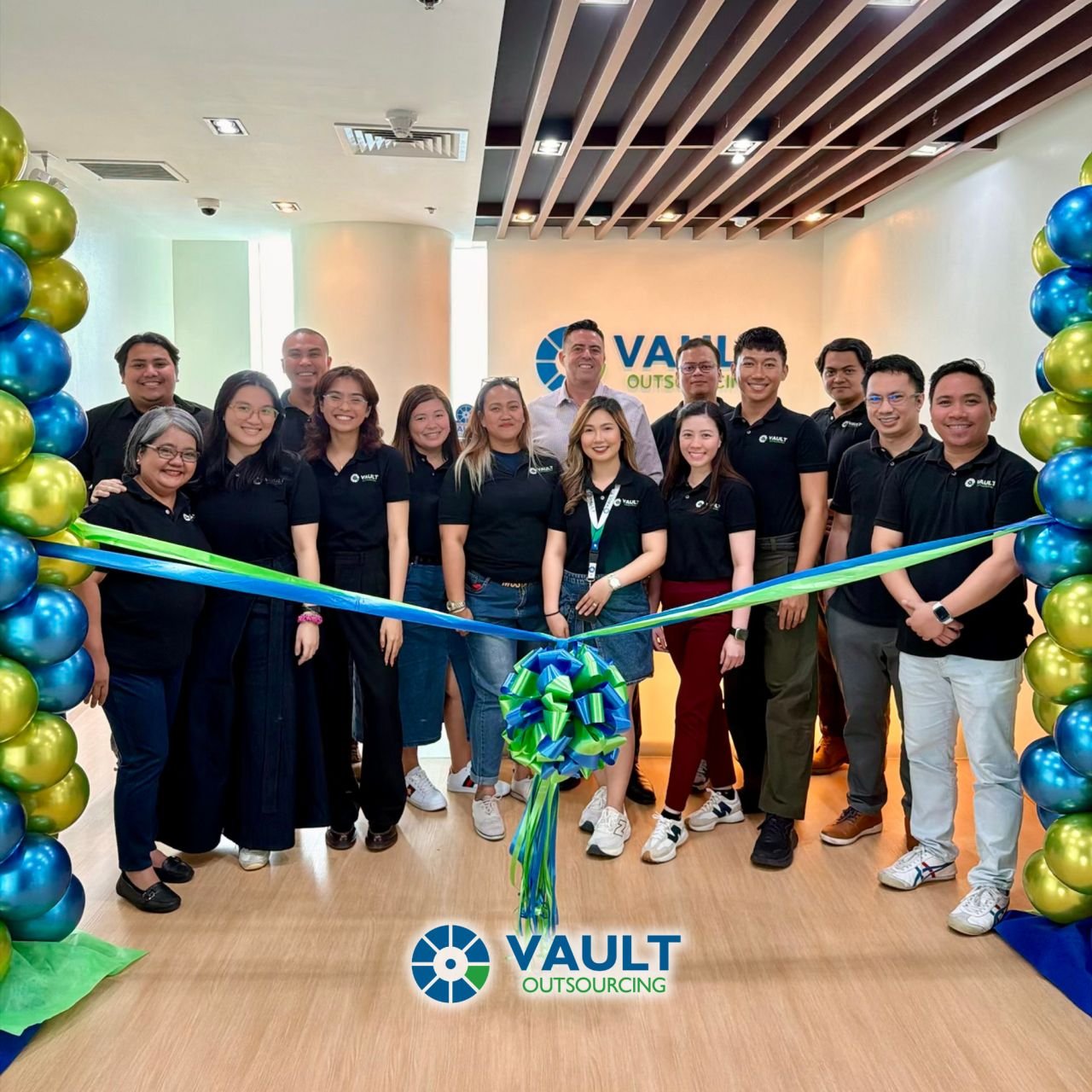
Collections careers can involve more than following a script or handling calls at speed. Vault Outsourcing presents collections as a specialist discipline, building dedicated Philippine teams for Australian financial services firms and fitting their work to each client’s processes.
For Filipino job seekers, its story offers a close look at one kind of finance-focused BPO employer: what work it handles, what it says it expects from collections staff, and what candidates should verify before sharing personal information or accepting a job offer.
What Vault built: collections careers

Vault began with a problem its founder knew firsthand. Dean Hutton, who had run a financial services business in Australia, tried several outsourcing providers while looking for ways to lower costs, increase revenue and improve efficiency. He says those providers did not take the time to understand how his business worked or identify what would genuinely help.
“A company profile is a starting point for questions, not a substitute for checking a specific job offer.”
As Vault recalls his experience, “The business was just another number.” Hutton later set out to create a provider with a more tailored approach. Founded in 2015, Vault is headquartered in Sydney and operates in Metro Manila, where it builds offshore teams for Australian financial services companies.
The company’s client base is deliberately focused. It works with firms such as lenders, fintechs, accountants and insurers, supplying roles that can be difficult for those businesses to fill. The positions it identifies include credit underwriters, collections specialists, data analysts and support staff. That range gives a sense of how collections careers may sit within a broader finance operations team, rather than being treated as a separate, generic call-centre function.
Vault says every team is dedicated to one client and works within that client’s systems and processes. Its stated model leaves policies, compliance requirements and collections strategy under the client’s control, while Vault takes responsibility for support functions such as IT, HR, payroll and facilities. For a candidate, that means the day-to-day role may be shaped by the client’s environment as well as the outsourcing employer. It is sensible to ask who you will report to, what systems you will use, and what training is provided before accepting a position.
The company says there is no minimum seat count: an engagement can begin with a single key hire or a full back-office team. Clients can choose project-based, short-term or permanent staffing, and Vault describes a 30-day satisfaction period in which a client may stop if the results are not right. Its four-step process is called plan, define, contract and hire.
Collections, done as a specialty
Vault argues that collections can lose effectiveness when it is treated as a high-volume call-centre task. Its position is that the work calls for people who can understand accounts and respond thoughtfully, not simply move through a fixed script. The company says its leadership has decades of practical experience operating collections teams onshore and offshore.
In describing the capabilities it looks for, Vault points to reading delinquency curves and receivables ageing, skip tracing, analysing write-offs and meeting regulatory requirements. These are specific skills, so applicants interested in collections careers should make their relevant experience clear. Examples might include working with account records, following a defined process, communicating with customers or using sound judgement when a case needs attention; candidates should be accurate about what they have actually done.
Vault also says it evaluates qualities that are harder to measure on a résumé. It screens candidates for emotional intelligence and judgement under pressure, arguing that an agent who responds to every situation with the same script can create resistance. That view puts communication and decision-making alongside technical knowledge. In an interview, a candidate can prepare examples that show how they listened, stayed professional during a difficult conversation and followed the correct procedure.
The company describes collections as a respected career in the Philippines and says that appropriate training and supervision can help people turn the work into results. That is Vault’s perspective, not a guarantee of a particular role or outcome. Candidates should ask about the actual position, its targets, coaching arrangements and the support available when a customer interaction becomes challenging.
Security and compliance built in
Financial services work can involve credit files and customer money, so Vault puts security and compliance near the centre of its pitch. The company says it received ISO 9001 certification for quality management and ISO 27001 certification for information security in November 2022. It also says it is accredited by PEZA in the Philippines and belongs to the Australian-New Zealand Chamber of Commerce in the Philippines.
Vault says its processes are designed around the expectations of Australian regulators, including APRA and ASIC. For job seekers, the practical point is not to assume that a company’s client sector automatically tells you what your role entails. Ask what data you may handle, what security procedures apply, and how the employer trains staff to follow them. A careful employer should be able to explain the responsibilities attached to the position.
Applicants should also protect their own information during recruitment. Before sending documents or accepting an offer, use this guide to check a BPO company and its vacancy. Keep identity documents and account details private unless you have verified who is requesting them; this guide explains ways to protect your identity during online applications. For conversations and attachments, review practical steps to secure your job-application email.
“Anyone who has concerns about outsourcing should put them aside and speak to Dean.”Mark Stephenson · Director, Freedom Finance
Growing its own leaders
Vault’s account of its growth includes Beryl Fauni, who joined the company as a collections agent and later became its Chief Operating Officer. The company says she had been with Vault for ten years when it shared this profile. Her career path is a concrete example of an employee moving from a frontline collections role into company leadership, though it should not be read as a promise that every employee will follow the same route.
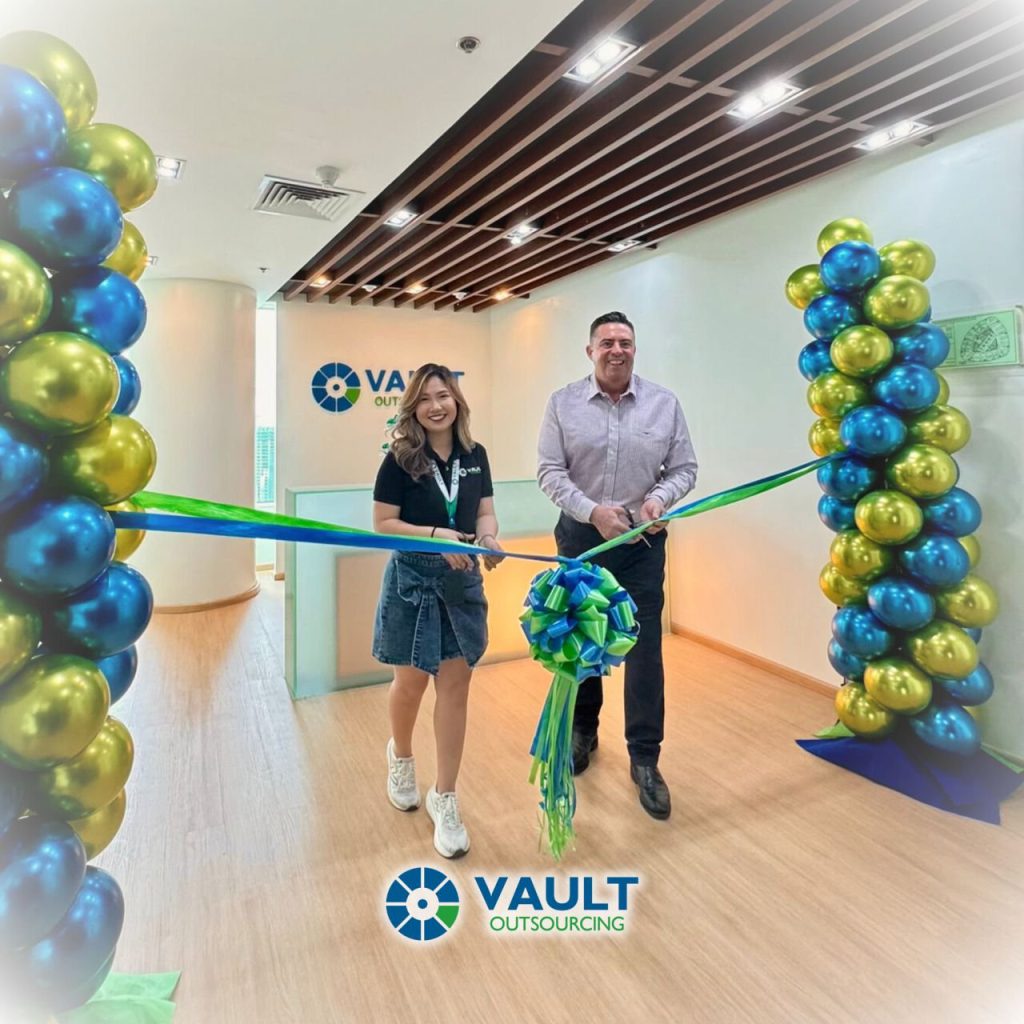
Fauni and Hutton jointly opened Vault’s newer office at Insular Life Corporate Centre in Muntinlupa, south of Metro Manila. For people considering collections careers, the example makes it reasonable to ask about progression: whether the employer offers coaching, how performance is assessed, and what experience may help someone move into senior or specialist responsibilities. Ask for clear details rather than relying on a general promise of growth.
Vault also publishes a customer endorsement from Mark Stephenson, Director of Freedom Finance: “Anyone who has concerns about outsourcing should put them aside and speak to Dean.” That is Stephenson’s quoted view on Vault’s website. A testimonial can help a candidate understand how a client describes the relationship, but applicants should still assess the specific job, employer and written offer for themselves.
What to look for in an offshore finance partner
Vault’s advice to financial services buyers is to evaluate a provider’s local regulatory expertise, industry experience, security, working-hour alignment and reporting transparency. It also argues that a single price covering everything is the clearest arrangement for finance teams. These are buyer-facing criteria, but they offer job seekers useful questions too: does the employer understand the work, explain its processes, and make responsibilities and reporting lines clear?
Vault points to its certifications, focus on Australian lenders and option to end an engagement within the first 30 days as starting points for a buyer’s assessment. Those statements describe the company’s offer to clients; they do not replace a candidate’s own checks. When applying, verify the vacancy, recruiter and terms directly. Check that the role you discussed matches the written offer, and pause if you are pressed to send sensitive information before you can establish who is asking for it.
For Filipinos weighing local BPO work against overseas opportunities, distinguish between a Philippine-based role supporting an overseas client and a job that requires migration. If a recruiter presents an overseas position, check current official guidance from the Department of Migrant Workers before making decisions about recruitment, documents or travel. The company profile here describes Vault’s Metro Manila operations and Australian clients; it does not establish that any particular vacancy is open or that a role involves overseas deployment.
About Vault Outsourcing
Vault Outsourcing was founded by Dean Hutton in 2015, is headquartered in Sydney and runs operations in Metro Manila. It builds dedicated offshore teams for Australian financial services firms and lists a team size of 201 to 500 people. Vault says it has processed more than $1B in secure online transactions for financial services clients. These are company-reported profile figures, not measures of an individual employee’s pay, workload or career prospects.
The profile presents Vault as a focused provider rather than a general-purpose outsourcer: financial services are its market, and collections is one of the disciplines it says it treats as a core specialty. It describes its team model as client-dedicated, with client processes and systems, and says it handles operational support such as HR and IT. For applicants, the useful takeaway is to assess the actual role and client assignment, not just the employer’s broad description.
Vault’s directory profile is noted as unclaimed and therefore does not carry a credibility score there. That is a reason to do your own employer and vacancy checks, not proof for or against a particular job. Confirm details through reliable company and recruiter channels, compare the written terms with what you were told, and keep a record of the application conversation.
What Filipino job seekers can take from the story
Vault’s approach frames collections as work requiring both process knowledge and human judgement. For candidates, that means presenting more than a claim that you are good at talking to people. Explain how you handle sensitive conversations, follow procedures, maintain accurate records and seek guidance when an issue falls outside your authority. If you are new to the field, be candid about your experience and ask what training the role provides.
Before applying, prepare a résumé that reflects your real skills, check the employer and the specific vacancy, and protect your documents throughout the recruitment process. Ask about the client assignment, working hours, reporting line, security expectations and performance measures. Those questions help you decide whether a role suits you and make it easier to spot gaps between a recruiter’s description and the written offer.
Collections careers can be part of a specialist financial services operation, but a company profile is not a job advertisement. Treat Vault’s story as a guide to the kind of work and employer questions involved, then assess each opening on its own terms. Your next step is to browse POEA Job Finder for relevant BPO and finance roles, and verify each employer and offer before sharing sensitive information.