
Tree Work Gets New Eyes: LiDAR Can Save You Money
A Melbourne tree-care business is exploring shared LiDAR scans and a custom CRM to reduce repeat measuring. The tools are in development, with qualified people still responsible for important decisions.
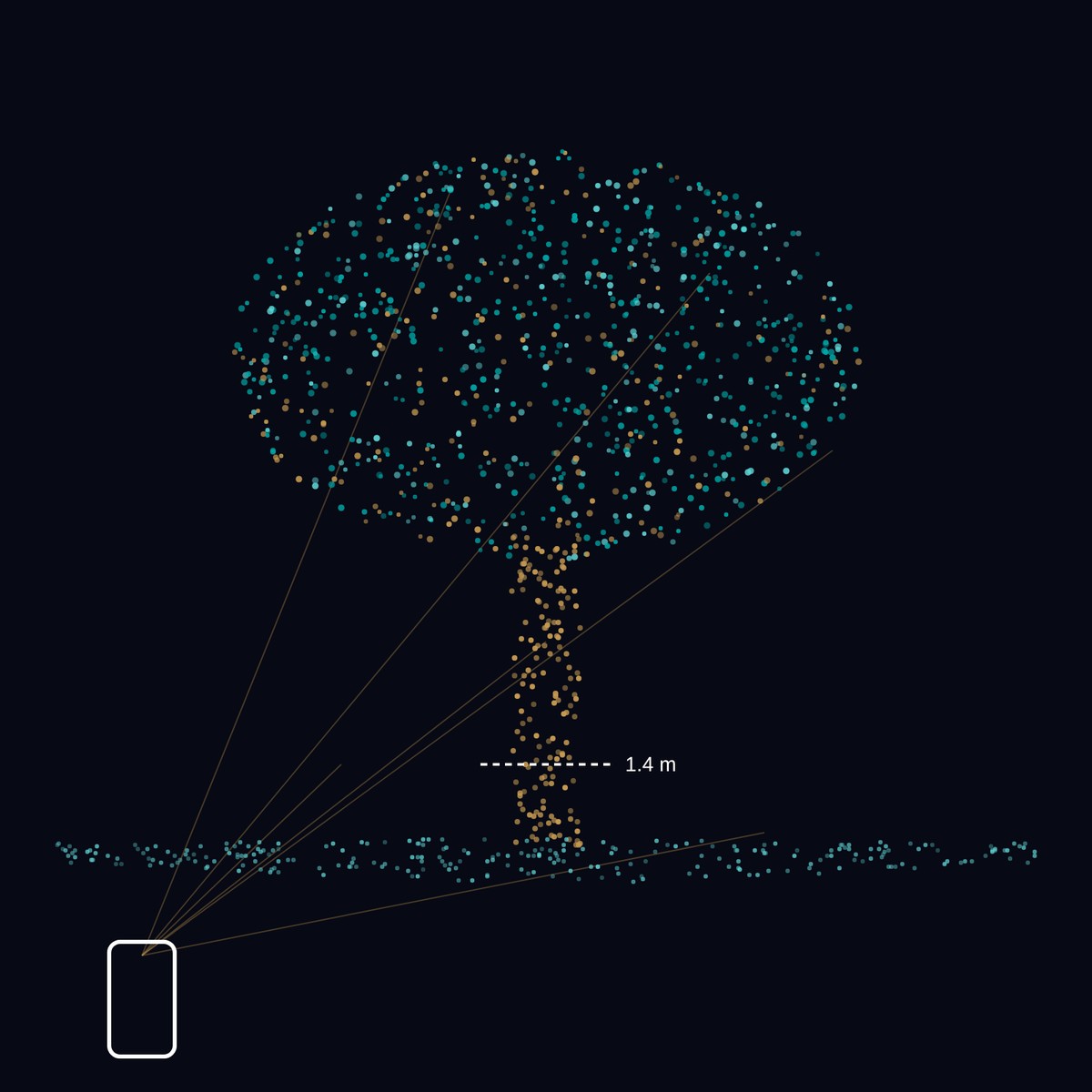
LiDAR tree scanning could help a tree-care business measure a site once and share the results, rather than paying for repeated surveys and estimates. Melbourne arborist and landscaping contractor TLC is developing this approach with LYRIQ, alongside a custom customer relationship management system (CRM). The tools are still in development, but the aim is to improve planning, records and communication before small site errors become expensive delays.
For Filipino job seekers, the project also illustrates how digital tools can support skilled work without replacing professional judgment. Its lessons apply to operations, customer service and quality assurance as well as tree care.
“Shared site information could reduce repeated work, but qualified people must still review measurements, safety risks and decisions.”Key takeaway · POEA Job Finder
Source: Tree Work Is Getting a New Set of Eyes. LiDAR Will Save You Money.
LiDAR tree scanning and the cost of measuring again
On a building or landscaping site, owners, designers, builders, landscapers, arborists and certifiers may all measure the same area. Councils may need information too. Each party can spend time gathering data, and separate measurements may not agree or stay current as work changes. TLC’s argument is that repeated effort—not measurement itself—is often where time, cost and disputes build up.
“Measure once, share the record and spend less effort reconciling conflicting versions.”
The business is developing two tools with LYRIQ. One is a custom CRM, at an early stage, to bring enquiries, quotes, jobs and follow-ups into a workflow shaped around tree and landscape work. The other is LiDAR-style scanning intended to gather and share site details faster than a process that could take weeks. One supports business operations; the other captures site conditions. TLC’s stated aims include less chasing and re-measuring, more transparency, and quality assurance that teams can see.
Several reported developments show why reliable land information matters. The source account says Google’s Finnish subsidiary reportedly cleared hundreds of thousands of trees for data-centre sites before environmental assessments were complete; work stopped and police opened a preliminary investigation. In Australia, SBS reported 3,472 construction business insolvencies in FY2025–26. Planning reform, neighbourhood disputes and rising costs also put accurate site information in focus. In Victoria, Clause 52.37 (from 15 September 2025) means many residential canopy trees need a permit before removal or lopping, and Insurance Business reports home insurance premiums are up about 51% in five years. These situations are different, but they share a risk: decisions made using missing, outdated or conflicting information.
For TLC co-founder Bobby Pallier, multiple parties creating multiple versions of a site can lead to duplicated expense and disagreement. His proposed alternative is a shared picture, so teams can discuss design choices using the same dimensions. The company’s project context is outlined in BPOAI.ai’s article on LiDAR and tree work. The principle is straightforward: measure once, share the record and spend less effort reconciling different versions.
How a 3D site picture could support daily checks
LiDAR means light detection and ranging. The technology sends laser pulses and measures how long they take to return. Those timings help calculate distances and build a three-dimensional model. Utilities, councils and surveyors have used LiDAR with specialist crews and equipment. TLC and LYRIQ are exploring how similar insight might become faster and less expensive for homeowners, smaller builders and local arborists. The technical design is still being developed, so this is not a finished service or a promise of a particular result.
The envisioned process is simple for the person on site: walk the property with a phone, then create a shareable model of trees, fences, slopes and distances. The hope is to replace a wait for a later survey with useful information sooner. Qualified people would still need to review important findings before relying on them.
TLC also imagines scanning at the end of each workday, rather than only once at the start. An arborist could record pruning, an excavator the result of digging, a landscaper planting and a builder a completed pour. Time-stamped scans could show how the site changed compared with the plan or earlier record. That might clarify accountability and help identify a cut root, incorrect level or damaged tree while a crew and its equipment are still there.
Finding a problem promptly could make correction simpler. Weeks later, work may already cover an issue and machinery may have left. A scan that flags it the same day could help a team respond before the next trade arrives. As Pallier puts it, “The cheapest fix is the one you make before the next trade arrives.” This is a potential benefit, not a guarantee that every issue will be detected.
Emergency tree work needs safer information first
After a storm, a fallen limb may be on a roof, a trunk may block a driveway, or a street may be dark. A crew arriving without a clear view may not know what a tree is resting on, where powerlines are or whether equipment can reach the site. TLC sees a possible role for a scan from a safe position: give the team an early 3D view of the fallen tree, contact points and access before it sets out.
That information could support triage, help select a suitable crew and machine, and provide a dated record for comparing conditions before and after a storm where an earlier scan exists. A record may also help explain what changed during an insurance discussion. The scan must not put the person collecting it in danger: do not approach from beneath a hanging limb or near a wire.
When a tree contacts powerlines, only the network operator and authorised electrical workers should approach it. A scan may help identify the hazard and alert the right people, but it does not replace them. More generally, a site record could help crews understand powerlines, leaning trunks, steep slopes and limited access before leaving the yard. It might flag trees that appear hollow, leaning or close to wires for earlier inspection by a qualified arborist. These are observations that need expert review, not declarations that a tree is safe.
““Less chasing. Less re-measuring. More transparency.””Bobby Pallier · Co-founder, TLC
Where tree scans could be useful
TLC plans to test the approach on its own jobs first. Possible applications include preparing quotes and crew plans with clearer measurements, access details and hazards; tracking tree condition and protection zones on building sites; and documenting large clearing projects, including construction or mining. An arborist, ecologist or accredited assessor would still need to check records against approved clearing plans.
Other potential uses include council street and park audits, where a scan might help identify trees for inspection; storm response, where qualified arborists could use a priority list; and records for schools and aged-care sites. A dated before-and-after model could document completion for clients and provide evidence if a dispute arises. The people responsible for each site—such as a project arborist, council arborist or client—would remain part of the review.
For Filipino readers considering careers in service operations, the broader lesson is that digital tools can change workflows without removing the need for skilled people. Roles may involve maintaining records, coordinating work, communicating with customers or checking information. Job seekers comparing local BPO roles can also review BPO opportunities in Cebu, Clark and Davao and assess the actual duties and work arrangements before applying.
Tree measurements, protection zones and possible savings
For tree protection, trunk diameter is a key measurement. It is commonly called DBH, or diameter at breast height, and under AS 4970 is measured 1.4 metres above ground. Some newer guidance, including Hobsons Bay Council’s, calls it DSH, or diameter at standard height; the measurement point remains the same. A tree protection zone (TPZ) radius is generally calculated as 12 times the trunk diameter. That measurement can inform permits, footings and driveways.
Victoria’s canopy-tree rule uses trunk circumference measured at the same height, which gives project teams another term to understand. A 50 cm trunk corresponds to a 6.0 metre TPZ radius. If it is mistakenly recorded as 40 cm, the calculated radius becomes 4.8 metres—a difference of 1.2 metres that could affect whether a footing is approved. The example shows why measurements and their interpretation matter. LiDAR tree scanning may help capture site details, but it does not remove the need to use the right standard or have a qualified person review the result.
TLC offers a financial illustration, not a quote or price list. On a mid-sized home project, multiple parties may measure separately, revise quotes when details change and incur rework or waiting because of errors. The account suggests that $32,000 in repeated measuring, rework and delay might become $3,200 if information were collected once and shared. Those figures illustrate a possibility; they are not a tested result or guaranteed saving.
The same account notes that a Melbourne land survey commonly costs $1,000 to $3,000. An Australian study from 2005 estimated rework at about 6.4% of contract value directly and 5.9% indirectly. It also reports that 7 in 10 builders charge for quoting and that 62% of surveyed small-business owners said quoting, invoicing and scheduling took more of their week than the work itself. Actual costs will differ by project, but these examples show why avoiding duplicated effort may matter.
Homeowners could gain clearer estimates and fewer surprises; arborists and landscapers could spend less time on unproductive visits; builders and designers could start from shared facts. Commercial clients could receive consistent records, councils better-supported applications, and insurers earlier evidence of risk. For a related example of AI supporting a professional review process, see how claims officers use AI to work faster.
People still need to check the software
Speed only matters when people can trust the information. TLC says its approach is software making an initial pass, followed by qualified people checking important details before anyone relies on them. Decisions should be logged, and where rules require a licensed surveyor, that professional must still sign. The aim is to direct expert attention and improve records, not to let software make safety or legal decisions alone.
That human-review principle matters to people building careers around AI-enabled operations too. Job seekers can ask employers what tools workers use, who verifies their output and how responsibility is handled. POEA Job Finder’s coverage of AI use and governance in outsourcing offers useful questions when assessing BPO roles and employers. Applicants comparing local BPO work with overseas employment can also consider the differences between working in the Philippines and abroad, including living costs, risks and career growth.
The practical takeaway is not that every local or overseas role will use LiDAR. It is that digital tools can create work for people who understand both a process and the service behind it: operations, customer communication, records, safety and quality checks. The project remains under development, and qualified professionals remain essential. If you are exploring BPO or technology-enabled careers, compare duties and training in current job listings, ask how quality is checked, and apply for roles that fit your experience.